A kitchen sink not draining is almost always caused by a build-up of cooking fat and food scraps in the P-trap, the U-shaped bend under the sink. Fat goes down warm and liquid, then cools and sets against the pipe wall. Coffee grounds, rice and starchy pasta water stick to it. Over a few months the opening narrows from 40 millimetres to the width of a pencil, and then one Sunday roast finishes the job.
Australians usually search for a blocked kitchen sink and Americans for a clogged kitchen sink. Same pipe, same problem. This guide is about working out which blockage you have. Once you know, our step-by-step guide to unclogging a drain covers the actual clearing methods.
The most common causes
Cooking fat and oil
This is the big one. Fat is liquid in the pan and solid in the pipe. Every rinse adds another layer, like plaque in an artery.
It is not a small problem either. Federal wastewater guidance in the US identifies grease from homes, restaurants and industry as the single most common cause of reported sewer blockages, at 47 percent. Your under-sink pipe is the first place it lands.
Food scraps
Rice and pasta keep swelling after they go down. Coffee grounds behave like wet sand and settle in the trap. Eggshell membranes wrap around everything else. Fibrous scraps such as celery strings and onion skins knit together into a mat.
A loaded P-trap
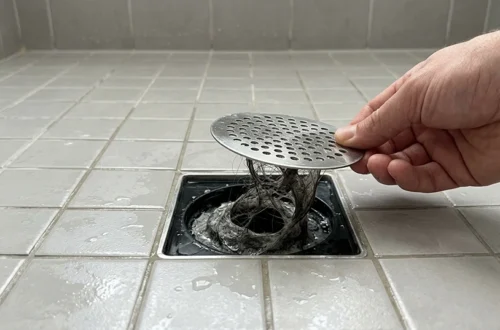
Even without a dramatic blockage, the trap collects sludge. Pull one apart after five years in a family kitchen and you get a grey paste that smells like a bin. That is normal, and it is the easiest thing on this list to fix yourself.
Garbage disposal problems
Common in US kitchens, rare in Australian ones. A disposal that hums but does not turn is jammed, and nothing will drain past it. A disposal that runs fine but drains slowly is usually pushing finely ground scraps into a pipe already coated in fat.
The dishwasher hose
If the sink backs up when the dishwasher runs, the shared drain line is partly blocked. Water takes the path of least resistance, which is up into your sink.
Blocked vent or main line
If the sink gurgles, the toilet bubbles when you drain the bath, and more than one fixture is slow, the problem is past your kitchen. Vent pipes let air into the system so water can flow. Tree roots in the main line cause the same symptoms. Both are plumber territory.
How to tell which one you have
Work through this before you touch anything:
- Only the kitchen sink is slow. Local blockage, likely in the trap or the pipe just past it.
- Both bowls of a double sink hold water. Blockage is downstream of where the two bowls join.
- Water rises in the second bowl when you run the disposal. Shared line, blocked past the tee.
- Sink backs up when the dishwasher drains. Shared drain line or a kinked dishwasher hose.
- Gurgling from other fixtures, or a smell from the drain. Vent or main line issue.
- Slow for months, not sudden. Grease build-up rather than a dropped object.
That last one matters. A sink that has been getting slower since autumn has a coating problem. A sink that stopped overnight has something stuck in it.
Simple checks you can do yourself
Start with the least invasive and stop as soon as it drains.
- Bail out the standing water. You cannot see or plunge through 10 centimetres of grey water.
- Check the strainer and the disposal. Torch, then fingers, then a pair of long-nose pliers. Never your hand inside a disposal.
- Try hot tap water and dish soap. Ten minutes of hot running water with a squirt of degreasing detergent will shift a soft fat layer. Very hot water can soften and warp PVC pipe joints, so tap-hot is enough.
- Plunge properly. Block the second bowl and the overflow, keep the plunger cup covered with water, then use short firm pushes. Most people plunge dry and wonder why nothing happens.
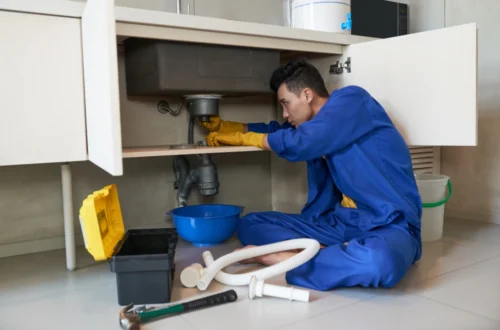
- Clear the P-trap. Bucket underneath, unscrew both slip nuts by hand, pull the trap off and clean it out. This solves a surprising share of kitchen blockages and takes 15 minutes.
If the trap comes off clean and the blockage is still there, it is further along the pipe than you can reach, and that is the point to stop.
What not to do
- Caustic drain cleaner. It sits on top of a fat blockage without clearing it, and then a plumber has to work in a pipe full of chemical. Many will refuse until it is flushed.
- Boiling water on plastic pipework. Fine on cast iron, risky on PVC joints and on the seals in a modern trap.
- Repeated heavy plunging on an old sink. Enough force can pop a slip joint apart inside the cabinet, and you will not notice until the floor is wet.
When to call a plumber
Get a licensed plumber in if any of these apply: more than one fixture is draining slowly, wastewater is coming back up anywhere, there is a sewage smell, you can see damp inside the cabinet, or you have cleared the trap and the sink still holds water. Drain cameras and jetters exist for a reason, and a blocked main line is not a DIY job.
In Australia, drain work past your own fixtures legally requires a licensed plumber. US licensing rules vary by state, so it is worth a quick check before you book anyone.
Plumbing is one of the trades we cover most in our home improvement section, because the failures are so predictable once you know what to look for.
How to keep it from happening again
- Pour cooking fat into a jar or an old can, let it set, then bin it
- Wipe greasy pans with paper towel before rinsing
- Use a fine strainer over the plughole and empty it into the bin
- Coffee grounds go in the compost, not the sink
- Run hot water for 20 seconds after washing up
- Pull the trap off once a year and clean it
That last habit alone prevents most of the calls plumbers get about slow kitchen sinks.
FAQs
Why is my kitchen sink not draining but the pipes are not blocked? The blockage is usually further along than you checked, often past the P-trap in the horizontal branch line. It can also be a vent problem, where air cannot enter the system and water drains slowly even though the pipe is clear.
Will baking soda and vinegar unblock a kitchen sink? Rarely. The fizzing looks impressive but has almost no force behind it, and it does not dissolve set fat. It works as a deodoriser, not as a drain clearer.
Can I use drain cleaner in a kitchen sink? It is best avoided. Caustic cleaners struggle against grease, can damage older pipework and make the job more dangerous for whoever opens the pipe next.
How much does it cost to clear a blocked kitchen sink? Most simple clears run between $150 and $400 in Australia and roughly $150 to $350 in the US. Jetting or camera work costs more, and after-hours callouts add a premium.
Is a slow drain an emergency? No, unless wastewater is coming back up into the sink or bath. That points to a main line blockage and needs same-day attention.