A slow drain is one of those household problems that creeps up on you. One week it’s draining a little slower than usual. A month later you’re standing in ankle-deep water during a shower. Understanding what causes a drain to clog is the first step toward fixing it properly and stopping it from happening again. Most blockages aren’t random, they come from predictable sources. Once you know what to look for, prevention becomes a lot more manageable.
The 12 most common drain blockage causes
1. Hair
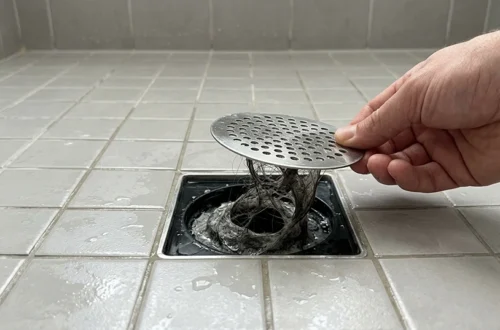
Hair is the leading cause of bathroom drain clogs. Loose strands shed during washing bind together in the pipe, catching soap residue and anything else that passes by. Over weeks this forms a dense, greasy mat that water can barely push through. A mesh drain catcher stops most of it at the surface before it gets into the pipe.
2. Soap scum
Traditional soap bars contain fat. When fat combines with the minerals in hard water, it forms a solid residue that sticks to the inside walls of the pipe. Over time this coating narrows the pipe diameter and traps everything else that flows through. Switching to liquid soap reduces build-up significantly. Flushing the drain with hot water weekly slows the accumulation.
3. Grease and cooking fat
Hot fat poured down a kitchen sink is liquid when it leaves the pan. By the time it cools inside the pipe, it’s a thick, waxy layer that coats the walls. Pour enough of it down over enough months and the pipe effectively closes off. Never pour cooking fat down the drain. Pour it into an old tin or container and bin it once it’s solid.
4. Food scraps
Even with a garbage disposal, small food particles end up in the drain. Coffee grounds are particularly bad as they clump together into a dense, wet sludge. Eggshells, rice, and pasta swell with water and stick to grease already on the pipe walls. A sink strainer catches most of this. Empty it into the bin rather than washing it through.
5. Toilet paper build-up
Toilet paper is designed to break down in water. Use too much in a single flush, or use a thick multi-ply product in an older system with lower flow, and it can accumulate before it dissolves. If a toilet is slow to flush and a plunger doesn’t fully clear it, excessive paper is usually the cause.
6. Wet wipes and cotton products
Wet wipes, cotton pads, makeup remover cloths, and similar products do not break down in water, regardless of what the packet says. They pass through the toilet but catch on pipe joints, build-up inside bends, and combine with other debris to form blockages that need a snake or high-pressure jetting to clear. These go in the bin, not the toilet.
7. Mineral scale
Hard water carries dissolved calcium and magnesium. Over years, these minerals deposit on the inside of pipes, narrowing them gradually. Scale build-up is common in areas with very hard water and tends to be worse in hot water lines. It’s invisible from the outside, which is why pipes in older homes can look fine but flow at a fraction of their original capacity.
8. Toiletries and small objects
A bar of soap that slips down the drain, a bottle cap, a child’s small toy. These physical objects sit in the pipe and catch everything else. Check the trap first. If the object is down there, removing the P-trap lets you retrieve it without any chemicals or tools.
9. Tree roots
Tree roots are drawn toward moisture and nutrients in sewer pipes. They find the smallest crack or join and push their way in, branching out through the pipe over time. A drain that runs slowly, gurgles, or backs up with no obvious indoor cause is a strong sign of root intrusion, particularly in homes with mature trees in the garden. This one needs a professional with a drain camera and root-cutting equipment.
10. Pipe damage or misalignment
Pipes that have shifted, cracked, or corroded create internal ridges and gaps where debris catches. This is more common in older homes where the original clay or cast iron pipes have degraded over decades. A camera inspection confirms it. In some cases, pipe lining can repair the issue without excavation.
11. Incorrect pipe slope
Drain pipes need a specific angle to allow gravity to carry water and waste toward the sewer. Pipes that sag or were installed with too little or too much slope cause waste to sit rather than flow. This is a structural issue that no amount of cleaning will fix permanently. It requires a plumber to assess the pipe run.
12. Venting problems
Every drain system needs a vent pipe that allows air to flow behind the water as it drains. If that vent is blocked by debris, a dead animal, or a cracked pipe, the system creates negative pressure. Water drains slowly, you hear gurgling from multiple drains, and the toilet trap may periodically go dry. A blocked vent stack needs a plumber to clear or repair it.
How to prevent drain clogs before they start
Most of these causes are preventable. The habits that stop drains from blocking are simple enough to stick to.
- Put drain catchers in every shower, bathtub, and bathroom sink
- Never put cooking grease, oil, or fat down the kitchen sink
- Bin wet wipes, cotton pads, and similar products, never flush them
- Run hot water for 30 seconds after each kitchen washing session
- Use a monthly enzyme drain treatment to digest organic build-up before it becomes a blockage
- Have a licensed plumber inspect older properties every few years, especially if you have large trees near the sewer line
For most clogs that do happen despite these habits, our full guide on
how to unclog a drain covers 10 methods in order from simplest to most hands-on, so you can match the fix to the situation.
When prevention isn’t enough
If a drain keeps blocking every few weeks even after you’ve changed your habits, the problem is likely mechanical rather than behavioural. Mineral scale, root intrusion, and damaged pipes don’t respond to drain cleaners or plungers. They need diagnosis and physical repair.
Get a local plumber to run a CCTV camera down the line. It takes 20 minutes and tells you exactly what you’re dealing with, which is far better than guessing. According to information published by the
Australian Building Codes Board on sanitary drainage systems, drainage systems are required to meet minimum slope and venting standards for exactly this reason. A plumber who does a camera inspection can tell you immediately whether your drainage meets these requirements.
FAQs about drain blockage causes
Hair and soap scum in bathroom drains, and grease in kitchen drains. These two causes account for the majority of household blockages.
Yes, and it’s more common than people expect. Roots from large trees, including ones several metres from the house, can enter sewer pipes through cracked joints and grow into full blockages over time. A camera inspection confirms it.
A drain that re-blocks within a few weeks usually has an underlying cause that cleaning doesn’t address. Scale build-up, root intrusion, or a damaged pipe section are the most likely culprits. A camera inspection gives you a definitive answer.
Not always. A vent problem creates slow draining and gurgling without a physical blockage in the drain itself. If multiple drains are slow at the same time and a plunger doesn’t improve things, a blocked vent stack is worth investigating.
Yes. In areas with hard water, calcium and magnesium deposits build up on pipe walls over years and narrow the internal diameter. The pipe looks fine from the outside, but the flow rate drops significantly. Descaling treatments and softer water sources help slow this process.